
Brakes
Stuck Brake Caliper: Why Does the Car Pull or a Wheel Get Very Hot?
Signs of a stuck caliper, and how it differs from pad wear or wheel alignment problems.
The short version
Slide pin greasing or replacement $27–65, full caliper rebuild $80–190, and hose replacement $20–55.
- 4 symptoms you can check yourself
- 4 diagnosis steps in order
- 2 FAQs answered directly
- Last editorial review: 2026-08-01 · 6 min read
The short answer
- One wheel noticeably hotter than the others after normal driving
- Caliper slide pin seized from rust or dried-out grease
- Carefully touch each wheel after a short drive to compare temperature
- Yes, and that's more dangerous than a full seizure since it's harder to notice quickly and wears pads and rotors unevenly.
Background
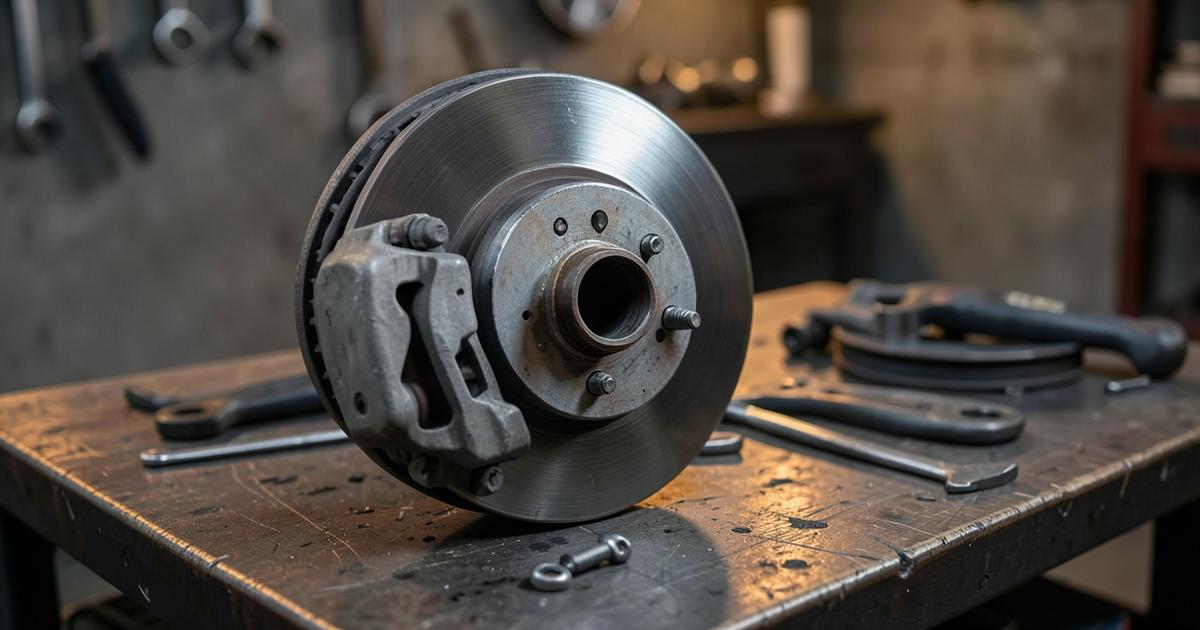
A stuck caliper means the brake pistons don't fully retract after releasing the pedal, so the pad keeps dragging against the rotor continuously. This causes excessive heat in just one wheel and a noticeable pull to one side during normal driving.
Numbers first: what you'll pay
Slide pin greasing or replacement $27–65, full caliper rebuild $80–190, and hose replacement $20–55.
Figures are a guidance range calculated with a published method — read the methodology.
Run your own estimateHow to spot it yourself
What actually causes it
- Caliper slide pin seized from rust or dried-out grease
- Caliper piston stuck internally from wear or dirt
- Rubber brake hose swollen internally, blocking fluid return
- Damaged caliper boot letting in dirt and moisture
Step-by-step inspection plan
- Carefully touch each wheel after a short drive to compare temperature
- Inspect the slide pins and grease them with high-temperature brake grease
- If the issue persists, have the rubber hose tested under pressure
- Don't delay the repair — excess heat can damage the wheel and tire
Prevention
Have calipers disassembled and greased at every pad change, especially in humid or coastal areas prone to rust.
Quick answers
Can a caliper work only partially?
Yes, and that's more dangerous than a full seizure since it's harder to notice quickly and wears pads and rotors unevenly.
Is pulling always caused by the caliper?
No, it could be wheel alignment or uneven tire pressure, so a heat check quickly distinguishes between the causes.
DriveMet review
Slide pin greasing or replacement $27–65, full caliper rebuild $80–190, and hose replacement $20–55. Have calipers disassembled and greased at every pad change, especially in humid or coastal areas prone to rust.
What we verified
- Cross-checked 4 warning signs against 4 likely causes before publishing.
- Reviewed 4 repair steps and confirmed the order a shop would follow.
- Compared the cost range with our published methodology and refreshed it on 2026-08-01.
- Answered 2 questions people actually search for on this topic.
Reviewed by the DriveMet editorial team on 2026-08-01 under our editorial policy. This is an editorial review of the page, not visitor ratings.
Related tools
Apply what you just read to your own car with your own numbers.
Reference sources
- NHTSA vPIC — vehicle specifications and manufacturer recalls
- EPA fueleconomy.gov — reference fuel-economy figures
- SAE J1979 standard for generic (Pxxxx) fault-code definitions
Related articles
Search this site
Ready-made searches that surface the guides, calculators, and cost pages tied to this topic.