
A/C & cooling
Coolant Flush Cost and Interval: When You Actually Need One
The real difference between a coolant change and a full flush, what each should cost, and how to spot an upsell you don't need.
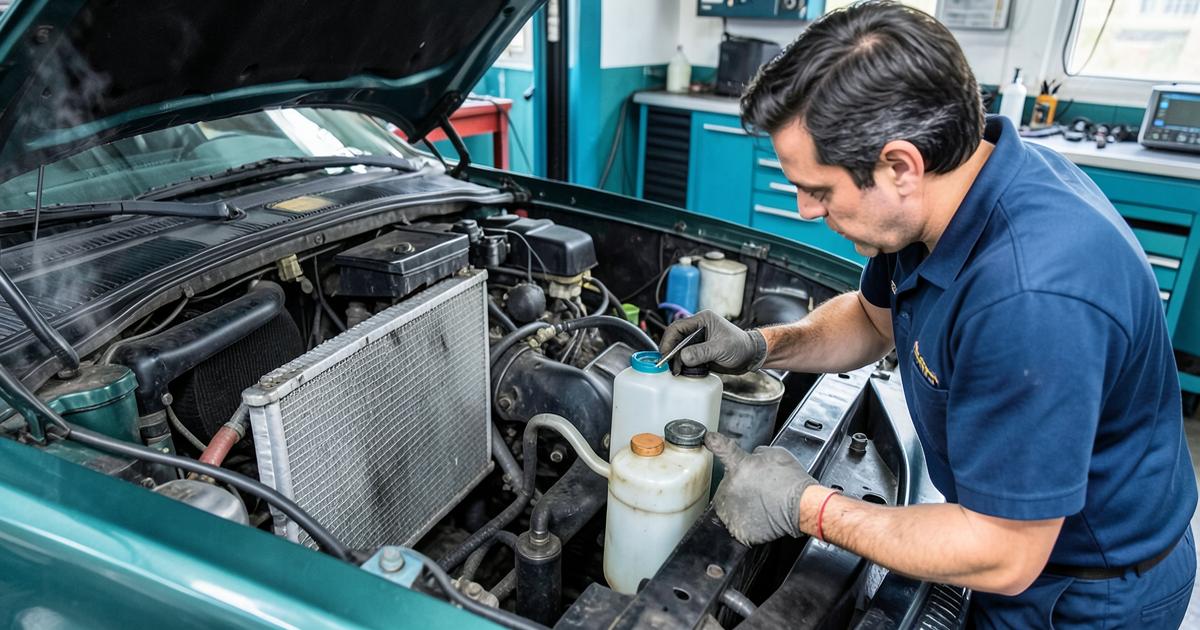
The short version
Standard drain-and-fill: $40-100 including fluid.
- 5 symptoms you can check yourself
- 6 diagnosis steps in order
- 4 FAQs answered directly
- Last editorial review: 2026-08-29 · 8 min read
Start here
- Coolant looks brown, rusty, or cloudy instead of clear green/pink/blue
- Coolant left in service for years, so the corrosion inhibitors are exhausted
- Inspect cold coolant: colour, clarity, smell — photograph the tank for later comparison
- Yes, on high-mileage cars. Pressure dislodges deposits that were plugging pinholes in the radiator or water pump. That isn't the shop's mistake, but it is another reason not to flush without cause.
What you notice while driving
The technical picture, simplified
A coolant flush is not the same job as a coolant drain-and-fill. A drain-and-fill replaces roughly 50-60% of the fluid because the rest stays trapped in the block and heater core; a flush pushes all of it out along with rust sediment. The flush usually costs about double, which is exactly why it gets sold to drivers who don't need it. Practical rule: change coolant on the manufacturer's schedule, and only flush when there is physical evidence — brown or rusty fluid, sludge on the reservoir cap, mixed coolant types, or after repairing an internal leak.
Ranked list of possibilities
- Coolant left in service for years, so the corrosion inhibitors are exhausted
- Mixing incompatible chemistries (IAT with OAT) which forms gel deposits
- Topping up with tap water instead of distilled, leaving scale and mineral deposits
- An internal head-gasket leak pushing combustion gases or oil into the system
- An old radiator with internally corroded, narrowed passages
Repair budget
Standard drain-and-fill: $40-100 including fluid. Machine flush: $95-200. Replacing a blocked radiator: $220-650 depending on the model. If a shop quotes a flush at more than double a change while your coolant is still clear, the service is likely unnecessary.
Figures are a guidance range calculated with a published method — read the methodology.
Run your own estimateDiagnostic path
Inspect cold coolant: colour, clarity, smell — photograph the tank for later comparison
Check the factory schedule: most modern long-life coolants run 5 years/100,000 km, older cars two years
Use coolant test strips (a few dollars) to read pH and freeze point — testing is cheaper than a wrong decision
If pH is in range and the fluid is clear, do the scheduled change and decline the flush
If you do flush, insist the invoice names the exact coolant specification, and refuse pre-diluted coolant billed at concentrate prices
After the service, run the engine with heat on full to purge air, then recheck level after two days — trapped air is the top cause of overheating right after a flush
Proactive maintenance
Stick to the factory interval, always use the same coolant specification, and never top up with tap water — distilled only, ideally a ready-mixed 50/50 blend.
Frequent enquiries
Can a flush actually cause a leak?
Yes, on high-mileage cars. Pressure dislodges deposits that were plugging pinholes in the radiator or water pump. That isn't the shop's mistake, but it is another reason not to flush without cause.
What is the difference between green and pink coolant?
Colour is a marketing choice, not a standard. What matters is the specification (G12++, Dex-Cool, Super LLC, etc.). Mixing two chemistries can produce deposits that block the radiator.
Can I run water only in hot climates?
No. Coolant raises the boiling point and prevents corrosion and pump cavitation. Plain water in 45°C heat boils sooner and eats the internal passages.
How do I know it's the head gasket and not the radiator?
Tell-tale signs: constant bubbling in the tank while running, sweet-smelling white exhaust smoke, or coolant loss with no external leak. A combustion-gas test in the coolant settles it for under $30.
DriveMet review
Standard drain-and-fill: $40-100 including fluid. Stick to the factory interval, always use the same coolant specification, and never top up with tap water — distilled only, ideally a ready-mixed 50/50 blend.
What we verified
- Cross-checked 5 warning signs against 5 likely causes before publishing.
- Reviewed 6 repair steps and confirmed the order a shop would follow.
- Compared the cost range with our published methodology and refreshed it on 2026-08-29.
- Answered 4 questions people actually search for on this topic.
Reviewed by the DriveMet editorial team on 2026-08-29 under our editorial policy. This is an editorial review of the page, not visitor ratings.
Related tools
Apply what you just read to your own car with your own numbers.
Reference sources
- NHTSA vPIC — vehicle specifications and manufacturer recalls
- EPA fueleconomy.gov — reference fuel-economy figures
- SAE J1979 standard for generic (Pxxxx) fault-code definitions
Related articles
Search this site
Ready-made searches that surface the guides, calculators, and cost pages tied to this topic.