
Engine & warning lights
How to Replace a Serpentine Belt Yourself in About an Hour
Releasing the tensioner, sketching the belt routing first, wear signs, and US parts and labour pricing.
The short version
US pricing: a quality Gatorback or Dayco belt is $22–$55, a tensioner $45–$120, an idler pulley $25–$70.
- 5 symptoms you can check yourself
- 5 diagnosis steps in order
- 4 FAQs answered directly
- Last editorial review: 2026-09-10 · 9 min read
Top 3 facts
- Squeal or chirp on cold start or when turning the wheel.
- Rubber hardening from heat and age after 5–7 years.
- Sketch or photograph the belt routing before removal — refitting it on the wrong path is the classic mistake here.
- For a short distance, yes, but squeal means slipping — reduced charging and weak cooling. A cracked belt can snap with no warning, taking the alternator and water pump with it and overheating the engine immediately.
Cost table
US pricing: a quality Gatorback or Dayco belt is $22–$55, a tensioner $45–$120, an idler pulley $25–$70. A tensioner release tool is $25–$45, or free to borrow from AutoZone and O'Reilly loaner programmes. Shops charge $120–$260 for the belt alone and $300–$600 with tensioner and pulleys; dealers $250–$500. DIY saves $90–$350. For perspective, a snapped belt on the road means a $100–$200 tow and possibly an overheat.
Figures are a guidance range calculated with a published method — read the methodology.
Run your own estimateWider context
The serpentine belt drives the alternator, power steering pump, A/C compressor and often the water pump. If it snaps you lose charging, assisted steering and cooling at once, and the car stops within a few miles. Fortunately it is one of the easiest jobs: one tool (a tensioner release wrench), about an hour, and a cheap part.
Early indicators
Sources of failure
- Rubber hardening from heat and age after 5–7 years.
- A weak tensioner spring letting the belt slip.
- An idler pulley with a failing bearing wearing one belt edge.
- Oil or coolant leaking onto the belt and degrading the rubber.
- Pulley misalignment after a previous repair.
Steps you should not skip
Sketch or photograph the belt routing before removal — refitting it on the wrong path is the classic mistake here.
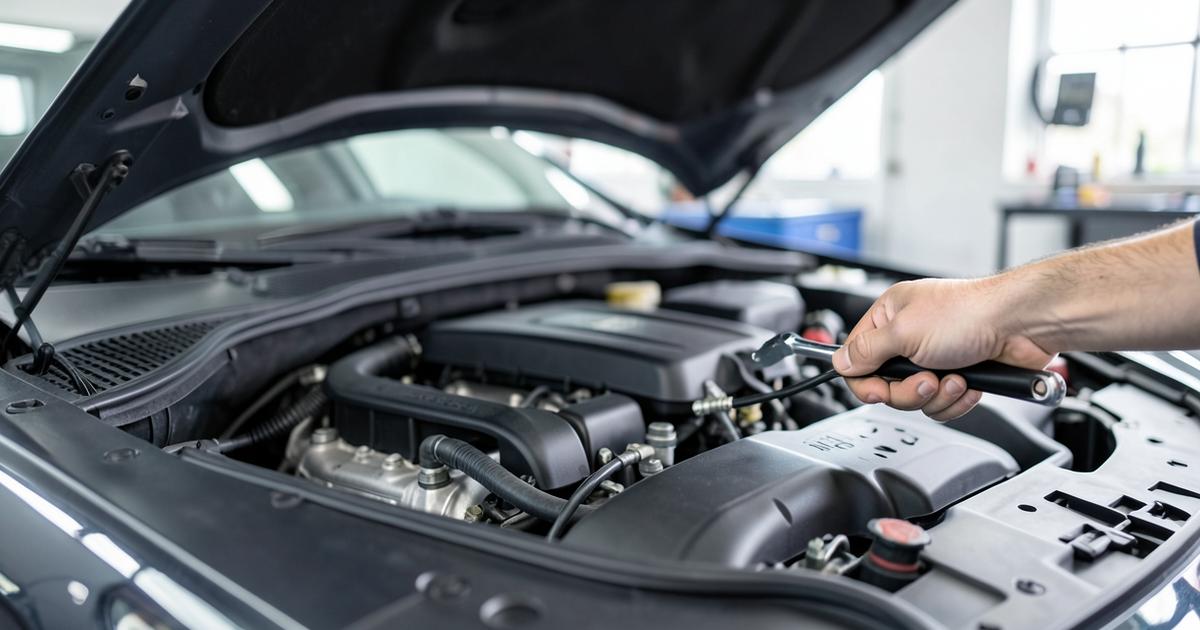
Locate the automatic tensioner, fit a ratchet or belt tool, rotate in the release direction to slacken the belt, then slip it off the top pulley.
With the belt off, spin every pulley by hand: any grinding or side play means a failing bearing that must be replaced now, not later.
Compare the new belt with the old one for length and rib count, then route it as sketched, leaving the smooth idler for last.
Release the tensioner slowly, confirm the belt is centred on every pulley, then run the engine a minute and watch for tracking and squeal.
Most asked
Can I drive with a squealing belt?
For a short distance, yes, but squeal means slipping — reduced charging and weak cooling. A cracked belt can snap with no warning, taking the alternator and water pump with it and overheating the engine immediately.
Should I replace tensioner and pulleys too?
Past 100,000 miles, yes; a weak tensioner will destroy a new belt within a few thousand miles. A complete kit (belt, tensioner, idler) is $90–$200 and saves repeating the job.
What is the difference between a serpentine and a timing belt?
The serpentine belt is external and drives accessories; if it breaks the car stops but usually without internal damage. A timing belt is internal and synchronises the camshafts; breaking one on an interference engine means $2,000–$4,000 in valve damage.
Why does a brand-new belt squeal?
Usually pulley misalignment, a weak tensioner, oil or coolant contamination, or the wrong belt length. Clean the pulley grooves with a wire brush, and never use belt-dressing spray — it collects dust and shortens belt life.
Yearly prevention plan
Inspect visually at every oil change, replace every 60,000–90,000 miles, replace the tensioner with it past 100,000 miles, and fix any oil leak contacting the belt.
DriveMet review
US pricing: a quality Gatorback or Dayco belt is $22–$55, a tensioner $45–$120, an idler pulley $25–$70. Inspect visually at every oil change, replace every 60,000–90,000 miles, replace the tensioner with it past 100,000 miles, and fix any oil leak contacting the belt.
What we verified
- Cross-checked 5 warning signs against 5 likely causes before publishing.
- Reviewed 5 repair steps and confirmed the order a shop would follow.
- Compared the cost range with our published methodology and refreshed it on 2026-09-10.
- Answered 4 questions people actually search for on this topic.
Reviewed by the DriveMet editorial team on 2026-09-10 under our editorial policy. This is an editorial review of the page, not visitor ratings.
Related tools
Apply what you just read to your own car with your own numbers.
Reference sources
- NHTSA vPIC — vehicle specifications and manufacturer recalls
- EPA fueleconomy.gov — reference fuel-economy figures
- SAE J1979 standard for generic (Pxxxx) fault-code definitions
Related articles
Search this site
Ready-made searches that surface the guides, calculators, and cost pages tied to this topic.