
Routine maintenance
OBD2 Scanner Buying Guide: Which Type You Need and How to Read Codes Yourself
The difference between a basic code reader and a professional diagnostic scanner, and how to use phone apps with a Bluetooth adapter.
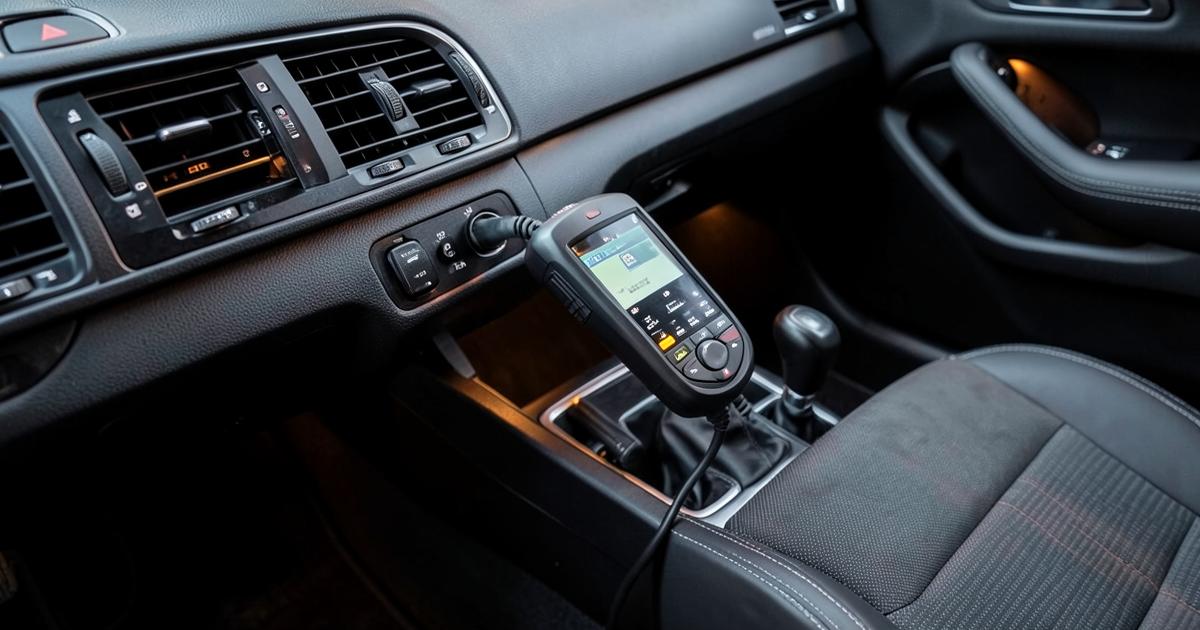
The short version
Basic code reader: $15-40. Bluetooth adapter with app: $20-80. Professional scanner with programming features: $210-800. Compared to a single shop diagnostic fee ($25-65), a basic…
- 4 symptoms you can check yourself
- 6 diagnosis steps in order
- 4 FAQs answered directly
- Last editorial review: 2026-08-31 · 8 min read
Overview
Since 1996 in most markets, and in every modern car sold in the Gulf, the OBD2 port sits under the steering column as a direct window into the engine computer. A code reader saves you the 'initial diagnostic' fee at a shop, but the real difference between cheap and professional tools is data depth: a basic reader only shows the fault code, while an advanced scanner streams live data from every sensor — exactly what precise diagnosis of misfires or weak performance needs.
Key takeaways
- Check Engine light on with no other indication of the cause
- No home diagnostic tool means paying a scan fee every visit
- Choose between a basic code reader ($15-40) for codes only, or a Bluetooth adapter (ELM327) with an app like Torque or Car Scanner ($20-70)
- No, clearing just turns the light off temporarily. If the root cause remains, the light returns within days or after a set number of drive cycles.
Symptoms
- Check Engine light on with no other indication of the cause
- Needing to know why the car failed a periodic inspection test
- Wanting to monitor engine temperature or fuel trim while driving
- The same light returning after a previous repair with no confirmed root cause
Likely causes
- No home diagnostic tool means paying a scan fee every visit
- Fully relying on a shop's estimate without actual data
- Using a cheap app or clone adapter that lacks live data, giving an incomplete picture
- Not clearing the code after a repair, so the light stays on despite the fix
Diagnosis & repair steps
- Choose between a basic code reader ($15-40) for codes only, or a Bluetooth adapter (ELM327) with an app like Torque or Car Scanner ($20-70)
- Start the car and plug the tool into the OBD2 port, usually left of the steering column under the dash
- Read the code (e.g., P0300 or P0171) and look up its exact meaning for your specific model, not a generic explanation
- Watch live data: coolant temperature, throttle position, and fuel trim to narrow down the real cause
- After the repair, clear the code from the tool itself and drive enough distance to confirm it doesn't return
- Keep a log of codes and dates — useful when selling the car or visiting the dealer later
Expected cost
Basic code reader: $15-40. Bluetooth adapter with app: $20-80. Professional scanner with programming features: $210-800. Compared to a single shop diagnostic fee ($25-65), a basic reader pays for itself after two or three uses.
Figures are a guidance range calculated with a published method — read the methodology.
Run your own estimateHow to prevent it
Don't treat a fault code alone as a final diagnosis — use it as a starting point, and gather live data plus real symptoms before buying any part based on a guess.
FAQ
Does clearing the code fix the problem?
No, clearing just turns the light off temporarily. If the root cause remains, the light returns within days or after a set number of drive cycles.
Are phone apps as reliable as dedicated scanners?
Largely yes, if you use a good-quality Bluetooth adapter (genuine ELM327, not a cheap clone) — the adapter matters more than the app itself.
Why does the same code mean different things on different cars?
Generic codes are standardized, but manufacturers add proprietary codes that need a scanner with that maker's database to interpret accurately.
Can the tool damage the car?
Normal reading is completely safe, but active control commands (like triggering a fan or injector) on professional tools should be used carefully and knowledgeably, or they can temporarily confuse the control unit.
DriveMet review
Basic code reader: $15-40. Don't treat a fault code alone as a final diagnosis — use it as a starting point, and gather live data plus real symptoms before buying any part based on a guess.
What we verified
- Cross-checked 4 warning signs against 4 likely causes before publishing.
- Reviewed 6 repair steps and confirmed the order a shop would follow.
- Compared the cost range with our published methodology and refreshed it on 2026-08-31.
- Answered 4 questions people actually search for on this topic.
Reviewed by the DriveMet editorial team on 2026-08-31 under our editorial policy. This is an editorial review of the page, not visitor ratings.
Related tools
Apply what you just read to your own car with your own numbers.
Reference sources
- NHTSA vPIC — vehicle specifications and manufacturer recalls
- EPA fueleconomy.gov — reference fuel-economy figures
- SAE J1979 standard for generic (Pxxxx) fault-code definitions
Related articles
Search this site
Ready-made searches that surface the guides, calculators, and cost pages tied to this topic.