
Electrical & battery
Parasitic Battery Drain: How to Track It Down Yourself
A professional method for isolating the circuit draining your battery while the car is parked, step by step with basic tools.
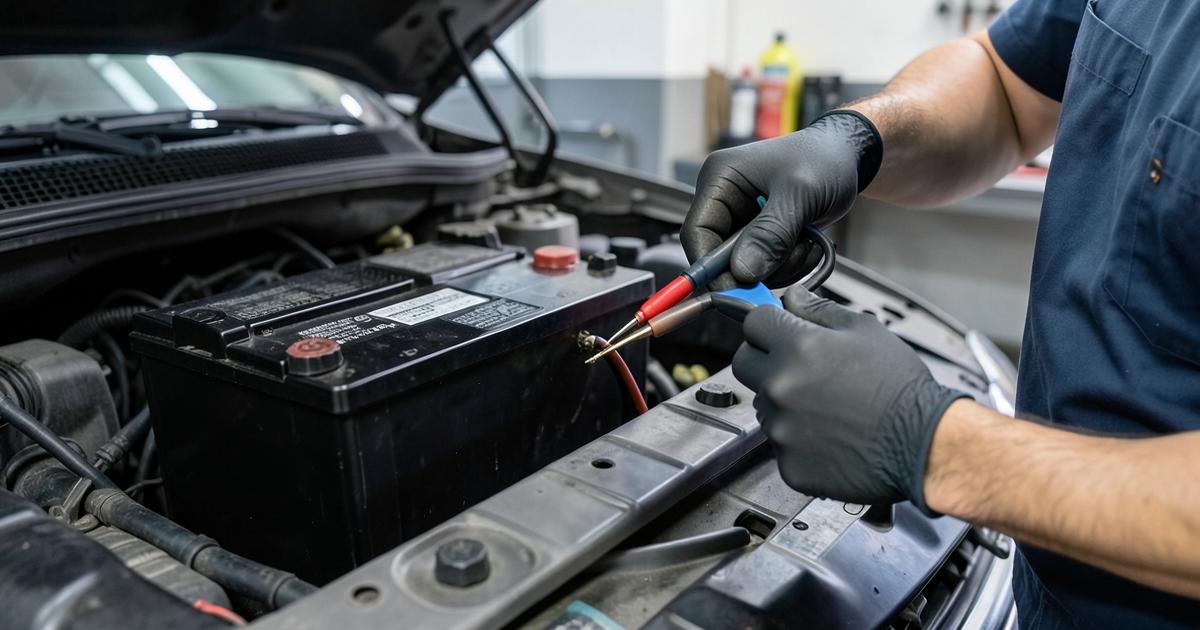
The short version
A specialist shop drain diagnosis costs $40–95, repairing a circuit or module $55–190, and removing a recently added accessory causing the issue is often free.
- 4 symptoms you can check yourself
- 4 diagnosis steps in order
- 2 FAQs answered directly
- Last editorial review: 2026-08-01 · 6 min read
Top 3 facts
- The battery drains within a day or two despite daily use
- A recently installed alarm or GPS tracking unit drawing constant current
- Let the car sit undisturbed (no doors opened) for at least 40 minutes before testing
- Usually 20–50 milliamps for radio memory and the alarm; anything over 100 milliamps warrants serious investigation.
Cost table
A specialist shop drain diagnosis costs $40–95, repairing a circuit or module $55–190, and removing a recently added accessory causing the issue is often free.
Figures are a guidance range calculated with a published method — read the methodology.
Run your own estimateWider context
Parasitic drain happens when a circuit keeps pulling current after the engine is off and doors are closed, and it's one of the hardest electrical faults to chase since it only shows up when the car is fully at rest.
Early indicators
Sources of failure
- A recently installed alarm or GPS tracking unit drawing constant current
- A door or trunk not closing fully, leaving its interior light partially lit
- A control module stuck in 'wake' mode due to a software glitch
- A minor short circuit where damaged wiring touches the metal body
Steps you should not skip
Let the car sit undisturbed (no doors opened) for at least 40 minutes before testing
Disconnect the negative terminal and insert an ammeter in series to measure the actual draw
Pull fuses one at a time while watching for the reading to drop at the responsible circuit
Once the circuit is identified, inspect the device directly connected to it (alarm, lighting, control module)
Most asked
How much drain is considered normal?
Usually 20–50 milliamps for radio memory and the alarm; anything over 100 milliamps warrants serious investigation.
Can I just disconnect the battery instead of fixing the drain?
A temporary and impractical long-term fix — you'll also lose memory settings (radio, seats) every time you disconnect it.
Yearly prevention plan
Avoid installing uncertified electrical accessories, make sure all doors and the trunk close fully, and disconnect the battery if leaving the car parked for a long period.
DriveMet review
A specialist shop drain diagnosis costs $40–95, repairing a circuit or module $55–190, and removing a recently added accessory causing the issue is often free. Avoid installing uncertified electrical accessories, make sure all doors and the trunk close fully, and disconnect the battery if leaving the car parked for a long period.
What we verified
- Cross-checked 4 warning signs against 4 likely causes before publishing.
- Reviewed 4 repair steps and confirmed the order a shop would follow.
- Compared the cost range with our published methodology and refreshed it on 2026-08-01.
- Answered 2 questions people actually search for on this topic.
Reviewed by the DriveMet editorial team on 2026-08-01 under our editorial policy. This is an editorial review of the page, not visitor ratings.
Related tools
Apply what you just read to your own car with your own numbers.
Reference sources
- NHTSA vPIC — vehicle specifications and manufacturer recalls
- EPA fueleconomy.gov — reference fuel-economy figures
- SAE J1979 standard for generic (Pxxxx) fault-code definitions
Related articles
Search this site
Ready-made searches that surface the guides, calculators, and cost pages tied to this topic.