
Electrical & battery
Battery Warning Light On While Driving: Step-by-Step Diagnosis
What the battery-shaped dashboard light means while the engine runs and its link to alternator charging codes.
The short version
Replacing the alternator belt alone costs $21-$67 (SAR 80-250), while replacing the full alternator ranges $185-$590 (SAR 700-2,200) depending on car type and availability of OEM…
- 5 symptoms you can check yourself
- 6 diagnosis steps in order
- 4 FAQs answered directly
- Last editorial review: 2026-08-31 · 7 min read
The short answer
- Battery icon lights up right at engine start or while driving
- Damaged internal alternator circuits (diodes or charging windings) stopping voltage production
- Check battery voltage with a voltmeter while the engine runs; normal reading should be 13.5-14.7 volts
- Rarely, since the light monitors the charging circuit, not the battery charge directly, but a very old battery with high internal resistance can sometimes confuse the regulator's reading and cause occasional lighting without a real alternator fault.
Background
The small battery-icon warning light doesn't necessarily mean the battery itself has failed — it's a general indicator for the whole charging system. When it comes on while the engine runs, it means the alternator isn't charging the battery at sufficient voltage or has stopped charging entirely. Continuing to drive will drain the remaining battery charge until the car suddenly stalls, often within 30-90 minutes depending on battery condition and electrical loads like A/C and lights.
Numbers first: what you'll pay
Replacing the alternator belt alone costs $21-$67 (SAR 80-250), while replacing the full alternator ranges $185-$590 (SAR 700-2,200) depending on car type and availability of OEM or aftermarket parts. Rebuilding (rewinding) the alternator instead of full replacement can save 30-40% of the cost at some alternator specialty shops.
Figures are a guidance range calculated with a published method — read the methodology.
Run your own estimateHow to spot it yourself
What actually causes it
- Damaged internal alternator circuits (diodes or charging windings) stopping voltage production
- Worn or slipping alternator belt failing to transfer motion efficiently for charging
- Dirty or loose main charging cable connectors between alternator and battery
- Failed voltage regulator built into the alternator in most modern cars
- Very old battery with high internal resistance confusing the charging system reading
Step-by-step inspection plan
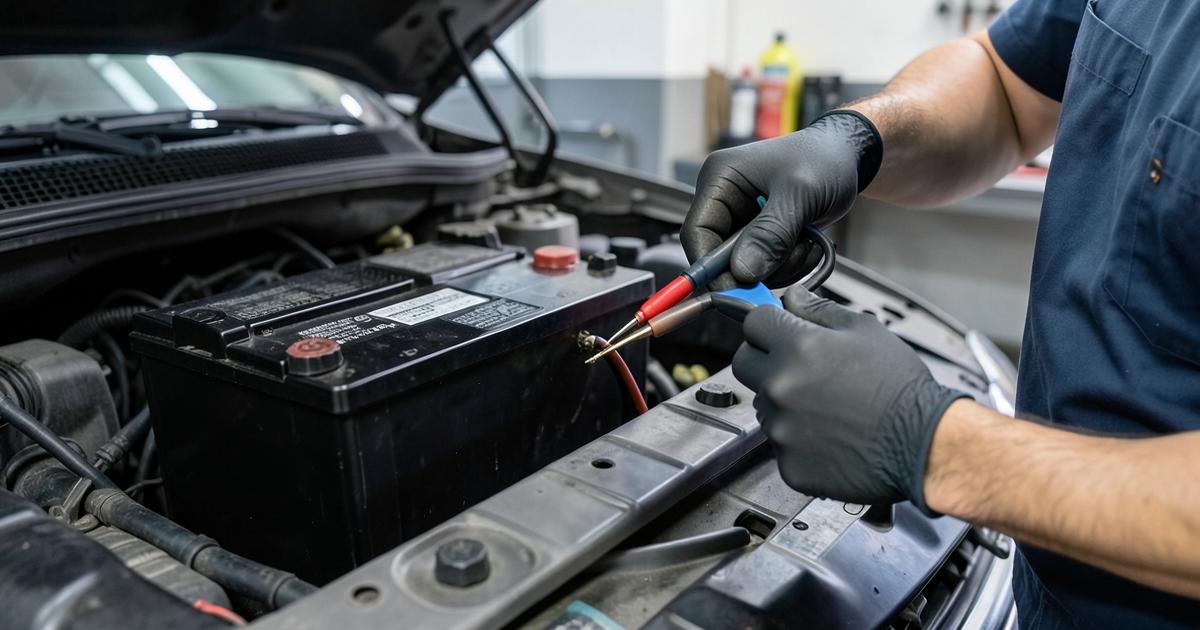
- Check battery voltage with a voltmeter while the engine runs; normal reading should be 13.5-14.7 volts
- If reading is below 13 volts or above 15 volts, the alternator or regulator is likely faulty
- Visually inspect the alternator belt for cracks or looseness and measure tension if possible
- Read the OBD code for the charging system if the car supports electronic monitoring of the alternator circuit
- Check the cleanliness and tightness of the main cable connectors between alternator and battery for corrosion or looseness
- Replace the alternator or belt based on findings, and re-measure voltage to confirm stable charging before a long drive
Prevention
Visually inspect the alternator belt at every oil change for cracking or wear, test battery voltage every 6 months, especially before summer since heat increases load on the charging system, and avoid leaving high electrical loads running for long periods with the engine idling slowly.
Quick answers
Can the battery light come on because of the battery alone without an alternator fault?
Rarely, since the light monitors the charging circuit, not the battery charge directly, but a very old battery with high internal resistance can sometimes confuse the regulator's reading and cause occasional lighting without a real alternator fault.
How long can I keep driving after the battery light comes on before the car stalls?
It varies based on battery condition and active loads, but typically ranges from 30 minutes to two hours, so it's advisable to turn off unnecessary loads (A/C, radio) and head to the nearest shop immediately.
Can I temporarily run the car with a weak battery if the alternator is healthy?
Yes, if the alternator charges normally, it will gradually charge the battery while driving, but if the battery is internally damaged (won't hold a charge), the problem will persist despite a healthy alternator.
Does a weak alternator belt affect components other than charging?
Yes, in many cars the same belt drives the water pump and A/C compressor, so its slipping or failure can also cause engine overheating or loss of A/C cooling alongside weak charging.
DriveMet review
Replacing the alternator belt alone costs $21-$67 (SAR 80-250), while replacing the full alternator ranges $185-$590 (SAR 700-2,200) depending on car type and availability of OEM or aftermarket parts. Visually inspect the alternator belt at every oil change for cracking or wear, test battery voltage every 6 months, especially before summer since heat increases load on the charging system, and avoid leaving high electrical loads running for long periods with the engine idling slowly.
What we verified
- Cross-checked 5 warning signs against 5 likely causes before publishing.
- Reviewed 6 repair steps and confirmed the order a shop would follow.
- Compared the cost range with our published methodology and refreshed it on 2026-08-31.
- Answered 4 questions people actually search for on this topic.
Reviewed by the DriveMet editorial team on 2026-08-31 under our editorial policy. This is an editorial review of the page, not visitor ratings.
Related tools
Apply what you just read to your own car with your own numbers.
Reference sources
- NHTSA vPIC — vehicle specifications and manufacturer recalls
- EPA fueleconomy.gov — reference fuel-economy figures
- SAE J1979 standard for generic (Pxxxx) fault-code definitions
Related articles
Search this site
Ready-made searches that surface the guides, calculators, and cost pages tied to this topic.